By Claudia-Elena Linul | Coaching The Amazing You™ | coachingtheamazingyou.com
You’ve installed your JSON-LD Schema. You’ve ensured your professional name is consistent across platforms. You’ve even tested your visibility on ChatGPT. But there’s one milestone that separates the “optimized” from the truly authoritative: the Google Knowledge Panel.
If you’ve done everything right in AEO and you’re wondering, “What comes next?” — this is it. The Knowledge Panel is where your digital identity stops being scattered signals and becomes a verified entity in Google’s Knowledge Graph. And in 2026, that verification is what AI systems use as their trust foundation.
What Is a Google Knowledge Panel, Exactly?
You’ve seen them before, even if you didn’t know the name. Search for any well-known person — an author, a CEO, a public figure — and on the right side of Google’s search results, you’ll see an information box: a photo, a brief biography, links to social profiles, notable works, and key facts. That’s a Knowledge Panel.
But here’s what most people don’t realize: this isn’t a paid feature. You can’t buy a Knowledge Panel. Google generates it automatically when its Knowledge Graph has accumulated enough confidence that you are a distinct, verifiable, notable entity. In other words, Google has decided it “knows” who you are.
A Knowledge Panel is not a marketing tool. It’s Google’s public statement that you exist as a verified entity in its understanding of the world.
This distinction matters enormously for AEO. When ChatGPT, Gemini, or Perplexity needs to verify whether someone is a real authority in a field, one of the strongest signals it can find is whether that person has an established entity in Google’s Knowledge Graph. The Knowledge Panel is the visible proof of that entity status.
Why Does This Matter for AI Visibility?
Let me connect the dots to everything we’ve discussed in previous articles on this blog.
In What Is AEO, we established that AI systems don’t rank pages — they build answers from trusted entities. In the article on JSON-LD Schema, we explored the technical language that helps machines understand who you are. In the piece on name consistency, we discussed why AI needs a single, unambiguous identifier to connect your signals. And in the AI visibility tests article, we showed how to measure whether AI can find you at all.
The Knowledge Panel is where all of these threads converge. It’s the destination. JSON-LD Schema, name consistency, structured content, external mentions — they’re all pathways leading to the same goal: convincing Google’s Knowledge Graph that you deserve entity status. And once you have that status, every AI system that references Google’s data inherits that trust.
What Google Needs Before It Creates Your Knowledge Panel
Understanding Google’s requirements is critical. The Knowledge Graph doesn’t create panels for everyone who has a website and a LinkedIn profile. It needs three things:
1. Entity Confidence
Google must be confident that you are a unique, distinct person — not confused with someone who shares your name, not a fictional creation, not an ambiguous reference. This is where name consistency becomes essential. If your website says “Claudia Linul,” your LinkedIn says “Claudia-Elena Linul,” and your book cover says “C.E. Linul” — Google sees three potential entities, not one confirmed one.
The ‘sameAs’ property in your JSON-LD Schema is your most powerful tool here. It explicitly tells Google: ‘The person on this website is the same person on this LinkedIn profile, this Facebook page, and this published book listing.’
2. Notability Signals
Google needs evidence that you’re worth knowing about — not just self-declared expertise, but independently verifiable proof. This includes:
- Published works: Books listed on Amazon, Google Books, or national library databases.
- Media mentions: Articles, interviews, or profiles in recognized publications.
- Professional affiliations: Verifiable roles in known organizations.
- Content authorship: Bylined articles on third-party platforms, guest posts, or collaborative publications.
- Speaking engagements: Conferences, podcasts, or events where you’re listed as a speaker.
The key word is “independent.” Google distinguishes between what you say about yourself and what others say about you. Both matter, but external validation carries significantly more weight in the Knowledge Graph’s confidence calculation.
3. Structured Data Clarity
This is where your JSON-LD Schema implementation becomes directly relevant. Google’s crawlers need to find structured markup on your “Entity Home” — typically your About page — that includes Person schema with clear attributes: your name, job title, description, known affiliations, published works, and crucially, your sameAs links connecting all your digital presences.
Without structured data, Google has to guess. With it, Google can verify. That’s the difference between being an anonymous data point and a recognized entity.
The Entity Home Concept: Your Single Source of Truth
Every Knowledge Panel needs an anchor — one URL that Google treats as the primary source of truth about you. In the AEO world, we call this your “Entity Home.”
For most entrepreneurs and personal brands, the Entity Home should be your own website’s About page. Not your LinkedIn (which you don’t fully control), not your Facebook page (which operates under platform algorithms), and not a third-party directory. Your owned web property, with your structured data, your biographical narrative, and your verified links.
Your Entity Home should contain:
- A comprehensive biography (minimum 600 words) written in third person, optimized for entity extraction.
- Person JSON-LD Schema with sameAs links to all your official profiles and published works.
- Direct links to verifiable proof: book listings, professional certifications, media mentions.
- A professional headshot that matches the images on your other platforms (AI image recognition is real).
- Consistent terminology — the same professional title, the same niche description, the same brand name, everywhere.
Think of your Entity Home as your digital passport application. Every piece of information should be verifiable, consistent, and structured for machine reading.
A Practical Roadmap: From Invisible to Entity-Verified
You’re not going to get a Knowledge Panel overnight. Google needs to accumulate confidence, and that takes deliberate, sustained effort. Here is a realistic roadmap based on what actually works in 2026:
Phase 1: Foundation (Weeks 1–4)
If you’ve been following the previous articles on this blog, you may already have this phase complete. Audit your current state: ensure your JSON-LD Schema is installed and validated (use Google’s Rich Results Test). Verify your name appears identically across all platforms. Confirm your About page functions as a proper Entity Home with all the elements listed above.
Phase 2: Notability Building (Weeks 5–12)
This is the phase most people skip, and it’s the one that makes the difference. Actively pursue external, independent mentions of your name and expertise:
- Publish a guest article on a recognized industry blog or publication.
- Appear as a guest on a podcast relevant to your niche.
- Ensure your books are listed on platforms Google indexes (Amazon, Goodreads, national libraries).
- Get quoted or mentioned in an article written by someone else.
- Submit a profile to relevant professional directories that Google trusts.
Each of these creates an independent data point that Google cross-references against your Entity Home. The more consistent these external mentions are with your structured data, the faster Google’s confidence grows.
Phase 3: Monitoring and Refinement (Ongoing)
Track your progress using three methods:
- Google yourself in an incognito window. Look at the right side of results. If a Knowledge Panel appears, you’ve arrived. If not, note what does appear and what’s missing.
- Use Google’s Rich Results Test regularly to ensure your structured data remains error-free after any site update.
- Run the AI visibility tests from our previous article periodically. Improvements in how ChatGPT and Gemini describe you correlate with improvements in your entity signals.
What Happens After You Get a Knowledge Panel
Once Google generates your Knowledge Panel, a critical next step becomes available: you can claim it. Google provides a verification process where you prove you are the person depicted in the panel — typically by signing into one of your verified profiles (YouTube, Google Search Console, or your website).
Claiming your Knowledge Panel gives you the ability to suggest edits: correcting your description, updating your image, adding or removing links. This is not editorial control — Google still decides what it displays — but it is a meaningful level of influence that reinforces your entity authority.
And here’s the AEO payoff: once you’re a verified entity in Google’s Knowledge Graph, every AI system that draws from Google’s data — including Gemini, Perplexity, and increasingly, ChatGPT — treats you with higher confidence. Your answers are more likely to be cited. Your name is more likely to appear in AI recommendations. You move from being one of many possible sources to being a verified authority.
Common Mistakes That Delay Your Knowledge Panel
Based on the patterns I’ve observed working on AEO implementations, here are the most frequent errors:
- Using your LinkedIn as your Entity Home. You don’t own LinkedIn. Platform changes can alter your URL, your content visibility, or your profile structure without warning. Always anchor your entity on a domain you control.
- Inconsistent naming across platforms. Even small variations (“Consultant” vs. “Strategist” in your title) create friction in Google’s entity matching algorithm.
- No external mentions. A perfectly optimized website with zero independent references tells Google that you’re self-declaring authority. The Knowledge Graph requires corroboration.
- Schema errors. Invalid JSON-LD doesn’t just fail silently — it can actively confuse Google’s crawlers. Regular validation is essential.
- Impatience. Entity recognition is not an overnight process. It requires consistent signal-building over weeks and months. The entrepreneurs who get their Knowledge Panel are the ones who treat AEO as a long-term strategy, not a quick fix.
The Knowledge Panel as Your AEO North Star
If you’ve been wondering what the ultimate measurable goal of AEO should be, this is it. The Google Knowledge Panel is the clearest single indicator that your digital identity has achieved entity status — that machines recognize you as a verified, notable, trustworthy source of expertise.
It’s not the only metric that matters. AI visibility on ChatGPT, Gemini, and Perplexity each have their own dynamics. But the Knowledge Panel is the foundational layer. Get that right, and everything else — AI citations, voice search mentions, featured answers — becomes significantly more achievable.
In the era of AI-driven search, the Knowledge Panel is not a vanity metric. It’s the single strongest proof that you’ve transitioned from a digital presence to a digital entity.
Ready to build your path to a Knowledge Panel?
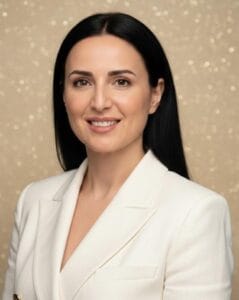
Claudia-Elena Linul is an AEO Business Strategist, Certified Neuroscience & Christian Life Coach, and Author with over 20 years of corporate leadership experience. She specializes in bridging the gap between human expertise and machine intelligence, helping professionals build unshakeable digital authority. Explore her insights on AI visibility and ethical growth at coachingtheamazingyou.com.