By Claudia-Elena Linul | Coaching The Amazing You™ | coachingtheamazingyou.com
Think about the last time you scrolled to page two of Google search results. You probably can’t remember. And neither can your clients.
Something has fundamentally shifted in the last two years. People don’t “search” anymore — they “ask.” They ask ChatGPT, Perplexity, Gemini. And these systems don’t return ten blue links. They offer a single answer. One source. One recommended expert.
The question that matters now is no longer “How do I rank on page one of Google?” It’s a deeper, more urgent question:
"When someone in my audience asks an AI about my field, am I the answer that appears?"
If you don’t know the answer to that question, chances are it’s no. And that’s exactly what we’re talking about today.
What Does AEO Actually Mean?
AEO stands for Answer Engine Optimization — optimizing for answer engines rather than search engines. It’s SEO’s newer, more sophisticated sibling, but with a fundamentally different philosophy.
SEO asked: “How do I get Google’s algorithm to find my page?” AEO asks something more ambitious: “How do I get AI to recommend me as the go-to expert?”
The difference isn’t just technical — it’s strategic. SEO optimizes pages. AEO builds entity authority.
When I say “entity,” I mean the way a large language model (ChatGPT, Perplexity, Gemini) understands and represents your brand in its internal knowledge base. Not as text on a webpage, but as a verified knowledge node with clear attributes: who you are, what you know, where you’re present, what you’ve created.
Why Your Brand Is Probably Invisible to AI Right Now
Let’s be honest for a moment. If you have a beautiful website, an active LinkedIn profile, a few published articles, and you’re consistent on social media — congratulations, you’re already doing more than most. But to an AI model, all of this can still be unstructured noise.
Here’s how an LLM thinks when it receives a question about your field:
It looks for consistency. If on your website you’re a “neuroscience coach,” on LinkedIn you’re a “business consultant,” and on Facebook you’re a “motivational speaker” — the AI sees three different entities, not one powerful one.
It looks for verifiability. Are there other sources, independent of you, that mention you? Articles, interviews, published books, podcasts? Without external evidence, your authority remains unconfirmed.
It looks for structure. Is your content organized in formats that AI can easily “extract” — clear definitions, direct answers to common questions, verifiable data? Or is it written only for the human eye?
If any of these three elements is missing, your brand is partially invisible in the AI ecosystem. Not completely absent — but fragmented enough that AI would rather cite someone else.
The Three Pillars of AEO Authority
The entrepreneurs, physicians, corporate managers, and coaches have a consistent pattern: those who become AI’s preferred sources share three things in common.
Pillar 1: Entity Clarity
AI needs to know unambiguously who you are. This means a single anchored professional title, repeated identically across all platforms. Not creative variations — deliberate consistency.
If your niche is "neuroscience coaching for entrepreneurs," that exact phrase needs to appear on your website, LinkedIn, YouTube, in your book bios, and in every other digital presence.
Terminological inconsistency is one of the most common errors I see. Not because people are careless — but because nobody told them that, from an AI model’s perspective, “applied neuroscience in business” and “neuroscience-based coaching” can appear as different domains.
Pillar 2: Structural Precision
Your content needs to be organized in formats that AI recognizes as authoritative. The most important technical tool for this is JSON-LD Schema Markup — a small piece of code placed in your site’s header that functions as a “digital ID card” for AI crawlers.
But beyond the technical aspect, structural precision also means how you write. Blog articles with direct answers in the first two sentences, clear FAQs with answers under 50 words, service pages with explicit definitions — all of these are signals that AI interprets as “trusted source.”
Pillar 3: Authority Signals
This is the component you can’t fake — and honestly, you shouldn’t want to. Real authority comes from external evidence: published books, media mentions, interviews, podcasts, verifiable collaborations.
The good news is that if you’ve already built a portfolio of real work — and I know many of you reading this have — this component is your strongest asset. It just needs to be visible and properly structured.
What a Practical AEO Strategy Looks Like for Your Personal Brand
I won’t promise you that “in six weeks you become ChatGPT’s number one source.” Authentic authority is built over months, sometimes years. But there are concrete steps you can take immediately that make a real difference.
Step 1 — The AI Perception Audit. Go to ChatGPT or Perplexity right now and ask: “Who is [Your Name]?” or “Who are the top experts in [your niche]?” The answer you receive is your starting point.
Step 2 — Anchor Your Terminology. Choose a single professional title and a single key phrase for your niche. Make sure it appears identically across all your platforms in the next 30 days.
Step 3 — Rewrite Your /About Page. This is the page AI consults as a priority to validate an entity. Minimum 600 words, structured into three clear sections: who you are, what problems you solve, your social proof with verifiable links.
Step 4 — Content With Answer Structure. Start writing blog articles where every subheading is a question your audience asks, and the first two sentences under each subheading provide the direct answer.
Why This Approach Is Different From Classic SEO
SEO and AEO aren’t adversaries — they’re complementary. But they have different philosophies and, sometimes, different tactics.
Classic SEO optimizes for algorithms that sort pages. AEO optimizes for AI systems that build answers. SEO measures position in SERP. AEO measures whether you’re cited as a source in AI conversations.
The most important difference: SEO can work with generic content that’s technically well-optimized. AEO requires authentic authority. You can’t “game” a language model the way you could game keyword algorithms. AI is better at detecting inconsistencies, superficiality, and lack of real expertise.
This is actually good news for those building authentic personal brands. In an AEO world, the real stakes return to genuine competence, experience, and consistency — not technical tricks.
Conclusion: Visibility in the AI Era Is Built, Not Bought
If you’ve made it this far, you probably feel there’s work to be done. And you’re right. But it’s valuable work, because it addresses a fundamental shift in how your clients find information and make decisions.
Every article you write with the right structure, every profile you align with the same entity language, every book published or interview given — all of it contributes to building a brand that AI recognizes, verifies, and recommends.
It’s not a sprint. It’s a marathon. But unlike many digital tactics that become obsolete with every algorithm update, authentic authority doesn’t expire.
In the AI era, the question is no longer "How do clients find me on Google?" The question is: "When an ideal client asks AI about their problem, am I the recommended solution?"
If you want to build that kind of visibility — solid, authentic, resilient to algorithmic changes — I’m here to help.
Ready to make yourself visible to AI?
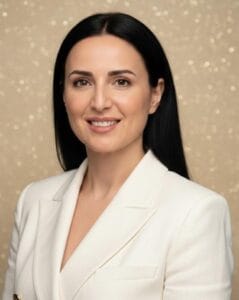
Claudia-Elena Linul is an AEO Business Strategist, Certified Neuroscience & Christian Life Coach, and Author with over 20 years of corporate leadership experience. She specializes in bridging the gap between human expertise and machine intelligence, helping professionals build unshakeable digital authority. Explore her insights on AI visibility and ethical growth at coachingtheamazingyou.com.